CORPORATE FINANCE & AI · NOV 2026 · EARLY BIRD £1,200
STARTS NOVEMBER 2026HYBRID: LONDON OR ONLINEONLY 40 STUDENTSEARLY BIRD £1,200

Be ready from day one in investment banking.

A 3-month evening course taught personally by an Executive Director at a tier-1 US investment bank. Financial modelling, valuation, pitchbook craft and the AI workflows of modern deal teams — the skills interns and analysts are actually judged on. Whether your next step is a spring week, a summer internship or your first analyst seat.

At a glance
  • 3 months, 1.5 hrs per week
    Weekday evenings or weekends
  • Hybrid format
    Join in London or online, session by session
  • One teacher, every session
    A serving Executive Director at a tier-1 US investment bank
  • Modelling and valuation
    Comps, DCF, a full model you build yourself
  • AI in every workflow
    The tools modern deal teams actually use
  • Capstone pitch book
    Present and defend your work under real pushback
Sample curriculum

Twelve weeks. One craft.

An indicative view of the arc. Exact week-by-week content is confirmed to enrolled students before the course starts. AI workflows — screening comps, drafting profiles, auditing models — are woven into every week, not taught as a separate topic.

Phase 1 · Weeks 1–5

The Analyst's Toolkit

  • Financial statement fluency: how the three statements link, and the drills interviewers use to test it
  • Enterprise value vs. equity value, EBITDA, working capital — the vocabulary of deal work
  • Trading comps: choosing the peer set and spreading them cleanly
  • Precedent transactions and what they really tell you
  • DCF: unlevered free cash flow, WACC, terminal value — and the sensitivity tables seniors actually read
You build

A complete valuation of a real listed company, three methods side by side.

Phase 2 · Weeks 6–8

The Model

  • A full three-statement model, built end to end
  • Excel as a craft: no-mouse modelling, formatting conventions, error checks
  • LBO logic and ability-to-pay; accretion/dilution and basic merger math
You build

A working model to bank formatting standards — yours to show in interviews.

Phase 3 · Weeks 9–12

The Deal

  • Pitchbook craft: structure, the football field, chart selection, turning comments fast and clean
  • Presenting a page and defending a number when a senior pushes back
  • Deal process anatomy: sell-side M&A and IPO from teaser to close, and who does what
  • The professional operating system: emails, checklists, taking a staffing, asking questions well
  • Capstone: present your pitch book and defend it under real pushback
You build

A pitch book you present and defend in the final session.

Sample curriculum — indicative, not contractual. Weeks 1–8 also cover the technical interview syllabus for banking almost in full: the course prepares you for the interviews that get you to day one, and for day one itself.

How a week works

One evening a week. Ninety minutes of doing, not listening.

0:00–0:20
The concept

The teacher shows how it's actually done on live deals — conventions, shortcuts, and the mistakes that get juniors noticed for the wrong reasons.

0:20–1:15
The work

You build, spread, model or present — live, with the teacher reviewing as you go. The same standard a first-year analyst is held to.

1:15–1:30
The debrief

Direct feedback, common errors across the cohort, and what to practise before next week.

Between sessions
Applied task + peer squad

A short applied task that feeds the next session, plus your peer squad — a small group holding each other to the standard.

Hybrid by design: join in London or online, session by session. Sessions run weekday evenings or weekends. Plan for around 3 hours per week in total.

What you leave with

What you leave with.

A valuation toolkit

Comps, precedents and DCF you can run — and explain out loud — without notes.

A model you built yourself

A full three-statement model to bank formatting standards, in your portfolio.

Pitchbook and presentation craft

You've structured a book, presented pages, and defended numbers under pushback.

AI workflows for deal work

Screening, drafting and model-auditing with AI — and the judgement to know what to verify yourself.

Interview-ready technicals

The course covers the banking technical interview syllabus almost in full.

A capstone review

Detailed final feedback from a senior banker who has watched your work for twelve weeks.

Not a degree. A certificate of participation is included — the real outcome is skills, access and a network you carry into application season.

The teacher

Every session, taught by the same senior banker.

The course is taught personally, every week, by an Executive Director at a tier-1 US investment bank — someone who evaluates junior talent for a living. No teaching assistants, no recorded lectures. Enrolled students meet the teacher from week one.

ED
Lead Teacher

Executive Director at a tier-1 US investment bank

Named on enrolment — employer approval for public naming is in progress.

Past teachers

Teachers from our July 2026 sprint included:

Suren Avanian
Investment Banking

Suren Avanian

Executive Director at J.P. Morgan

J.P. Morgan EDex-Citi VPM&A / ECM
Expertise

How investment banking really works and what banks look for.

LinkedIn
Kamil Burganov
Private Equity

Kamil Burganov

PE Investor and Senior VP at GIC Infrastructure

PE InvestorGIC SVPWharton MBA
Expertise

How private equity investors assess businesses, risk and value creation.

LinkedIn
Asan Kurmanguzhin
Founder

Asan Kurmanguzhin

Founder of an $800M-exit startup

Harvard MBAex-McKinseyScaled Instamart
Expertise

How founders build, scale and hire in high-growth companies.

LinkedIn

Shown for background on the calibre of past teaching. Company names describe practitioner background only — not sponsors or partners.

The usual vs. the course
The usual

Typical student prep

  • Watching lecture recordings and reading guides
  • Theory you can't demonstrate in an interview
  • Generic Excel courses with no banking conventions
  • No one senior ever reviews your work
  • First real feedback arrives on the job — when it counts against you
The course

Corporate Finance & AI Course

  • Build models, spread comps, present pages — every week
  • One senior banker reviewing your work for twelve weeks
  • Bank-standard formatting, hygiene and speed
  • AI workflows integrated into every task
  • A capstone defended under real pushback
  • A portfolio you can show: model, valuation, pitch book
The principle

A training ground, not a lecture series.

Every student builds, presents and gets reviewed — to the standard a first-year analyst is held to.

Who it's for

You'll leave much better prepared to work in finance.

This course assumes you've chosen banking. The same skills are tested at every stage — spring weeks, internships, analyst seats. We take you to the standard, wherever you're starting from.

Years 1–2 · Spring weeks

Banking recruiting starts earlier than anyone tells you. Spring week applications open in your first term — and the students who convert them are the ones who already speak the language.

  • You want a real head start while most of your year hasn't opened a careers page.
  • You want the technicals down cold before your first interviews and assessment centres.
  • You want to arrive at a spring week able to follow the deal talk — and ask sharp questions.
  • You want two full recruiting cycles ahead of you with the skills already banked.
Penultimate year · Summer internships

The summer internship is the front door to a banking career — and the interns who convert to offers are the ones who can already do the work.

  • You want to have built a real model before you're asked to touch one on a desk.
  • You want your work reviewed by someone who evaluates juniors for a living.
  • You want the formatting, speed and hygiene that get interns trusted with real tasks.
  • You want to present and defend work under pushback before it decides your return offer.
Final year & new analysts

You're targeting or holding an analyst seat — and you want your first review to say "operates above their year."

  • You want the first months to feel like repetition, not survival.
  • You want AI workflows that make you faster than your peer class from day one.
  • You want to close any gap between your degree and what the desk actually requires.
  • You're ready to build every week, not sit through lectures.
This is probably not for you if
  • You're still deciding whether banking is for you.
  • You want to sit quietly through passive lectures.
  • You expect an offer to be guaranteed by attendance alone.
  • You're only interested in receiving a certificate.
Results

We already ran the first cohort. Here's what happened.

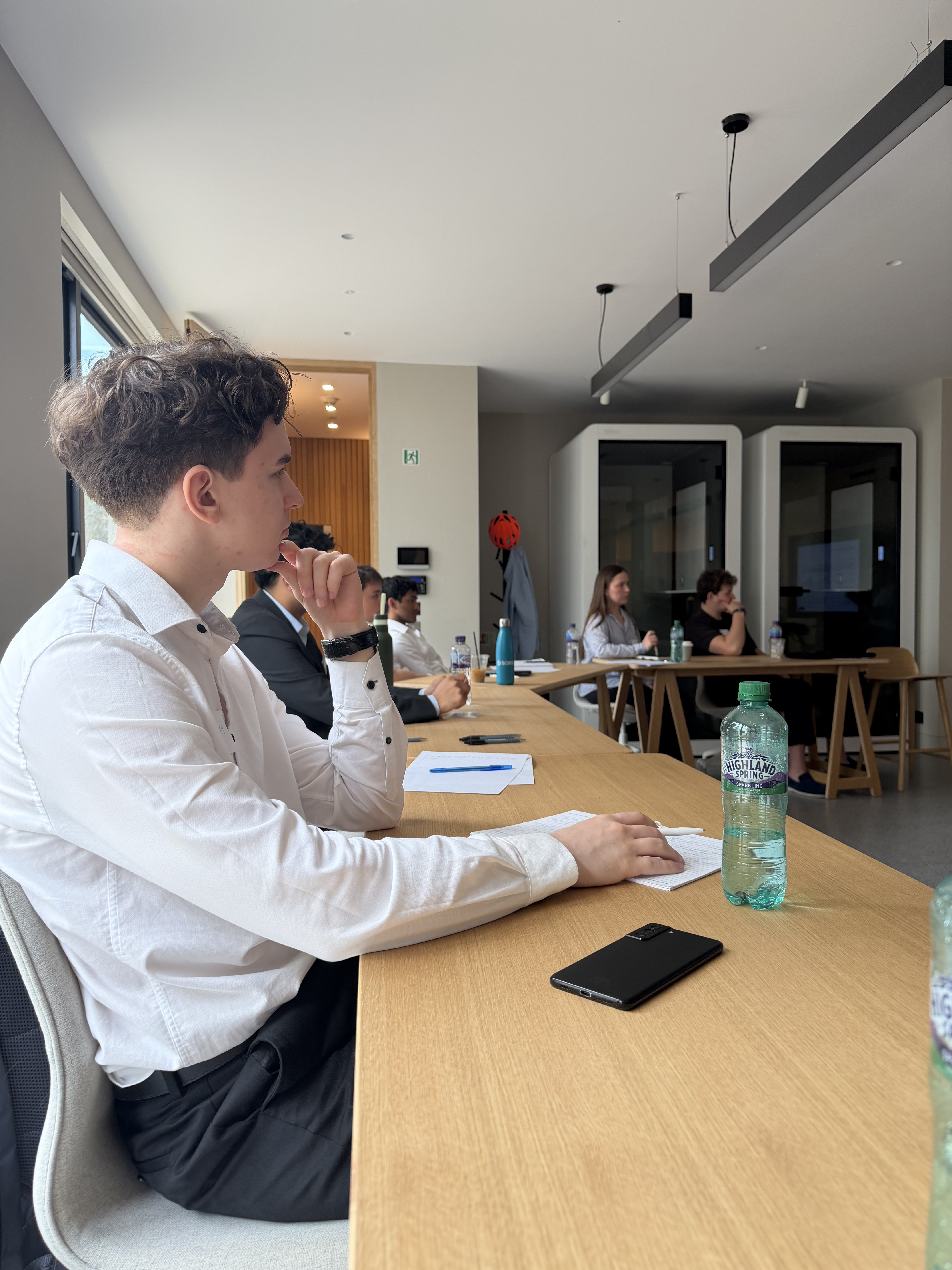
In July 2026 we ran the Finance Career Access Sprint — two intensive days at Brighteye Ventures in Notting Hill. Nine students from top UK universities worked live cases with senior practitioners from investment banking, private equity and asset management. The course applies the same method — practitioner-led, hands-on, small cohort — to a full three months of investment banking skills.
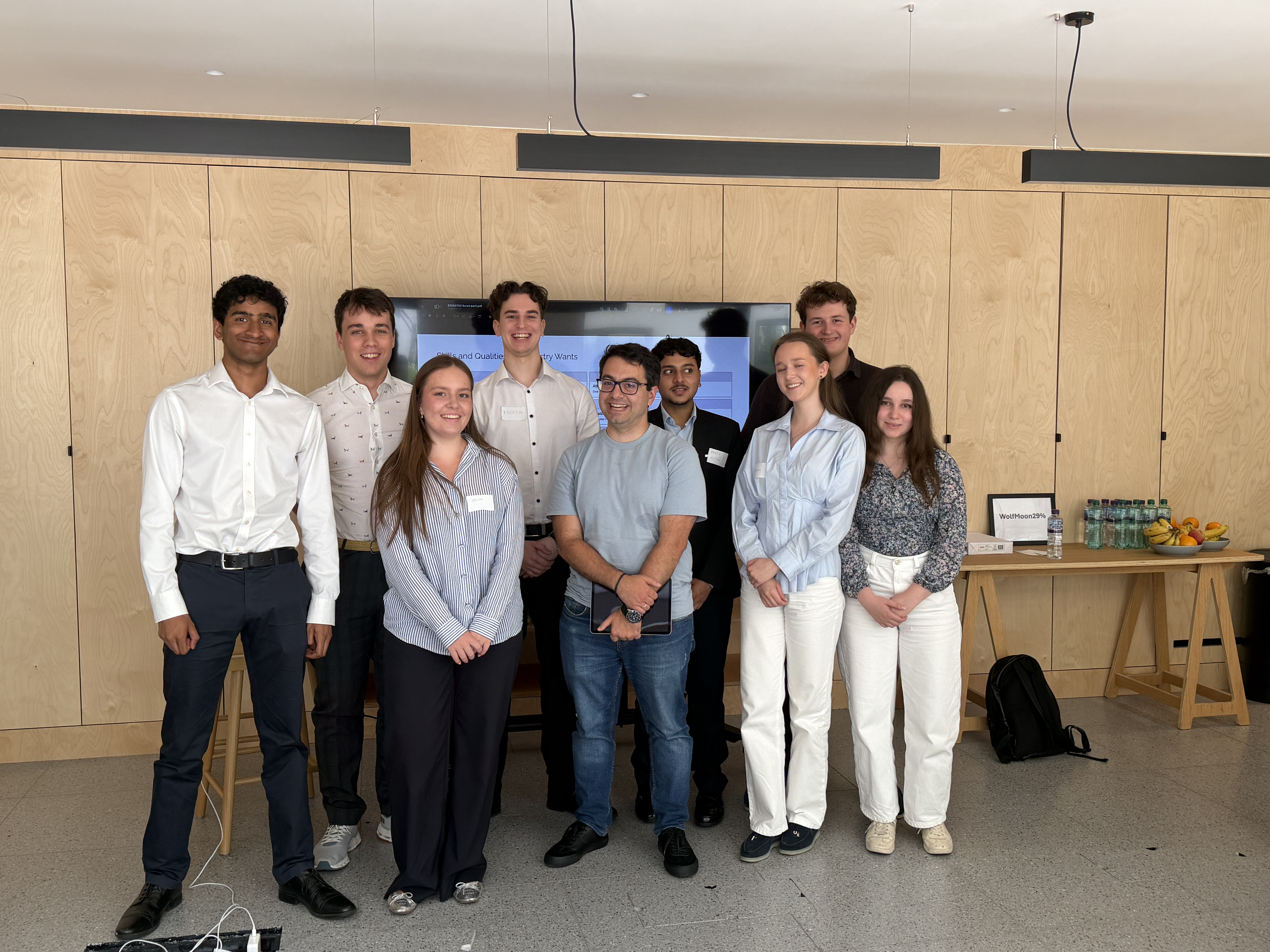

Sprint group photo at Brighteye Ventures
Students working together
Practitioner-led seminar
Alisa Borisova
BSc International Social & Public Policy with Economics, LSE
LinkedIn

"I really enjoyed building my own chief-of-staff with Claude and different AI platforms. It gives a real sense of direction."

Ross Overton Farnham
BSc Mathematics & Economics, University of Glasgow
LinkedIn

"I got connected to so many people I wouldn't have had access to otherwise — the kind of connections you can't buy."

Ashok Mohan
John Colet Academic Scholar, St Paul's School
LinkedIn

"I learned so much about all the different routes into finance — roles I hadn't known about before."

Trofim
BA Business Management with Marketing, University of Leeds
LinkedIn

"Insights from professionals you couldn't access anywhere else — and some of the most ambitious students I've met."

"That kind of advice you don't get off Claude, you don't get off ChatGPT, you don't get off Gemini. You get it from an actual person with real experience."

— Ross, on learning from practitioners
FAQ

Questions, answered.

Join the cohort

Enter application season with an advantage.

Join the November 2026 cohort at the £1,200 Early Bird price. From 16 September 2026, the price rises to £2,000. Forty places, one teacher, three months to day-one ready.

Early Bird pricing of £1,200 available until 15 September 2026, after which the full price of £2,000 applies · payment processed securely via Revolut · confirmation and next steps by email.

Have questions? Email asan@edpower.team or message us on WhatsApp.